
Dr. Donna Christensen - Congresswoman, Physician. Here is Her Journey
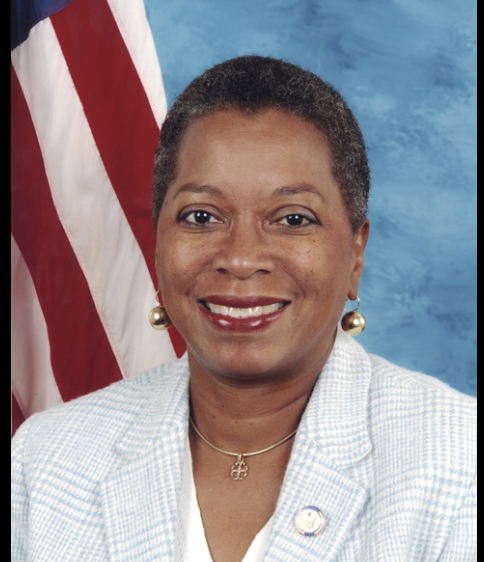
Dr. Donna Christensen
I recently had the pleasure of talking with Dr. Donna Christensen for my podcast, ‘What’s On Your mind,’ and wanted to share a little bit of our conversation.
Most people choose between medicine and politics. Dr. Donna Christensen chose both, and in doing so, she became the first woman physician ever elected to the United States Congress.
Born and raised in St. Croix, Christensen's path toward medicine began with a small booklet from the Negro Scholarship Fund that spelled out a simple truth: communities of color needed physicians of their own. She went on to train at George Washington Medical School, carrying that sense of purpose through every chapter of her career.
"Politics requires passion and commitment. Start at the local level, build from where you are."
THE MOMENT THAT CHANGED EVERYTHING
It was a summer of volunteering at Resurrection City, the Poor People's Campaign encampment on the National Mall, that crystallized Christensen's dual calling. Treating patients in that environment showed her that healthcare and advocacy were inseparable. Soon after, she became a family physician specializing in adolescent medicine, and was among the first to treat an AIDS patient in St. Croix at a time when the stigma around the disease was transforming how patients were seen in hospitals.
What she witnessed there fueled decades of legislative work.
FIGHTING ON THE HILL
As a delegate representing the U.S. Virgin Islands in Congress, Christensen fought on multiple fronts. During the Clinton administration, she secured $150 million in funding to address the AIDS crisis in minority communities, a battle won only after facing significant opposition. She pushed for the establishment of a center for minority health at the NIH, a goal that required legislative maneuvering just to get the word "minority" into the name.
Her fingerprints are on the Affordable Care Act too. She helped establish PCORI; the Patient-Centered Outcomes Research Institute, alongside a Republican colleague from Michigan, working against committee resistance to create an independent body focused on research that actually serves patients. She fought for FDA authority over tobacco, advocating to include menthol in regulations, and negotiated provisions to study menthol's effects when a full ban proved politically out of reach.
Throughout it all, Christensen championed what she called the social determinants of health, the idea that education, housing, and economic opportunity are not separate from healthcare, but are healthcare.
"Health equity isn't just about what happens in a clinic. It's about education, housing, economic opportunity, everything that shapes a life."
BIPARTISANSHIP IN A FRACTURED ERA
Christensen is candid about how much harder governing has become. Today's Congress, she says, has largely abdicated its authority, caught between White House dominance and a political climate that punishes cooperation. The antidote, in her view, isn't nostalgia but character: elected officials willing to take risks, guided by a moral compass strong enough to withstand the pressure.
For aspiring politicians, her advice is grounded and spcific. Start local. Run for a school board. Join a city council. Build the relationships and the track record that make larger service possible.
COMING HOME
Recently, Christensen returned to St. Croix for the groundbreaking of the Donna M. Christensen Health Center, a moment she describes with characteristic modesty and clear-eyed satisfaction. The center represents what she spent her career working toward: health equity not as an abstract principle, but as a building where real people receive care.
She continues to advocate, to stay engaged, and to work, because, as she puts it, losing your purpose is its own kind of illness. The work keeps her sharp. It keeps her in the fight.
And the fight, for Dr. Donna Christensen, is far from over.